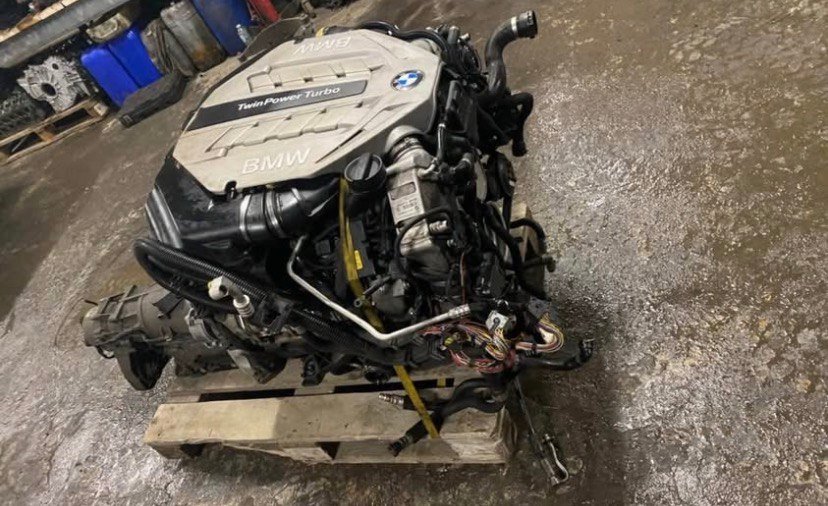
The BMW 525i in the third 5 Series generation (E34, built 1988–1996) was built with 3 different engines over its life: the M20B25 (170 hp, 1985–1993), the M50B25 (192 hp, 1990–1996) and the M50TUB25 (192 hp, 1992–1995).
This guide tells you which engine your 525i has, what goes wrong with it, what a replacement costs from our stock and what else to plan for when you fit one.
- Generation: third 5 Series, 1988–1996
- Body styles: E34 (saloon, Touring)
- Engines: M20B25, M50B25, M50TUB25
- Output: 170 hp and 192 hp
- Replacement engines in stock: 7 from 1.210,00 €
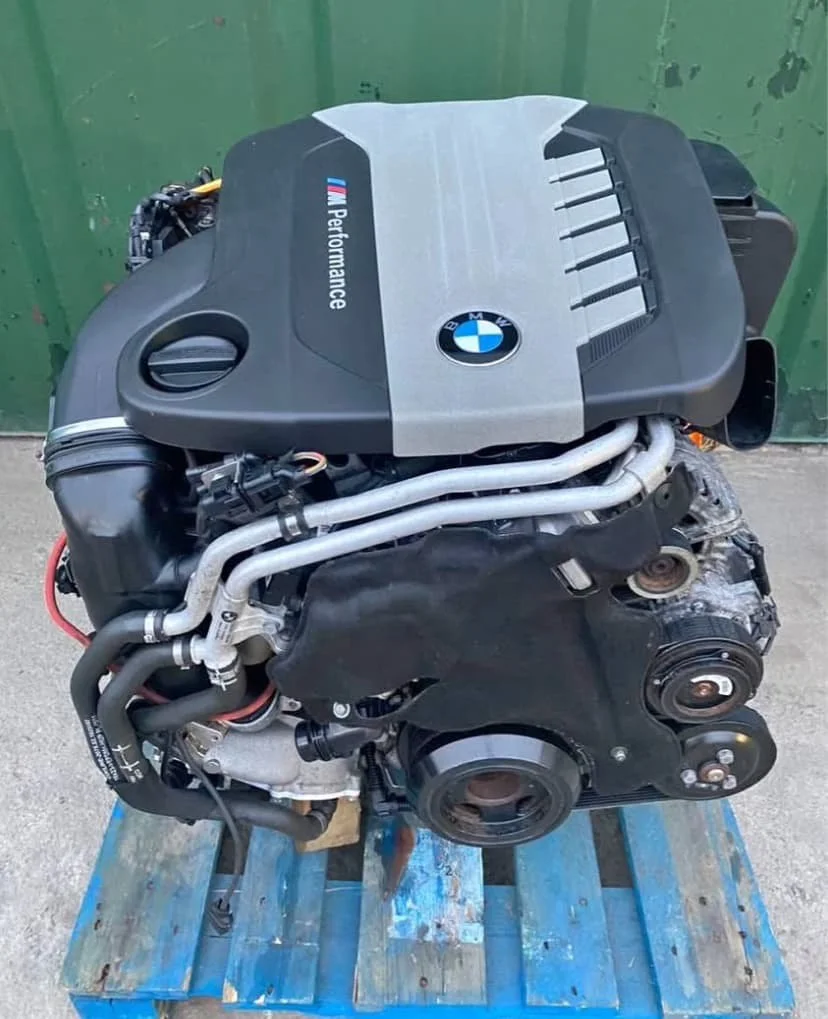
Which engine is in your 525i?
| Engine code | Built | Power | Torque | Type |
|---|---|---|---|---|
| M20B25 | 1985–1993 | 170 hp | 226 Nm | 2.5 L petrol inline-6, naturally aspirated |
| M50B25 | 1990–1996 | 192 hp | 245 Nm | 2.5 L petrol inline-6, naturally aspirated |
| M50TUB25 | 1992–1995 | 192 hp | 245 Nm | 2.5 L petrol inline-6, naturally aspirated |
M20B25 in the 525i
The M20B25 was used in the E34 525i, built 1985–1993. It is a 2.5 L naturally aspirated petrol inline-6 with 170 hp and 226 Nm. Compared with the M50B25 (192 hp) and M50TUB25 (192 hp), it is the mildest.
Reading the code: M marks an M-series code, the naming BMW used for its engine families up to the early 2000s; 20 is the family number; B stands for petrol (from the German Benzin); 25 is the capacity in decilitres, so 2.5 litres.
M50B25 in the 525i
The M50B25 was used in the E34 525i, built 1990–1996. It is a 2.5 L naturally aspirated petrol inline-6 with 192 hp and 245 Nm. Compared with the M20B25 (170 hp) and M50TUB25 (192 hp), it is in between.
Reading the code: M marks an M-series code, the naming BMW used for its engine families up to the early 2000s; 50 is the family number; B stands for petrol (from the German Benzin); 25 is the capacity in decilitres, so 2.5 litres.
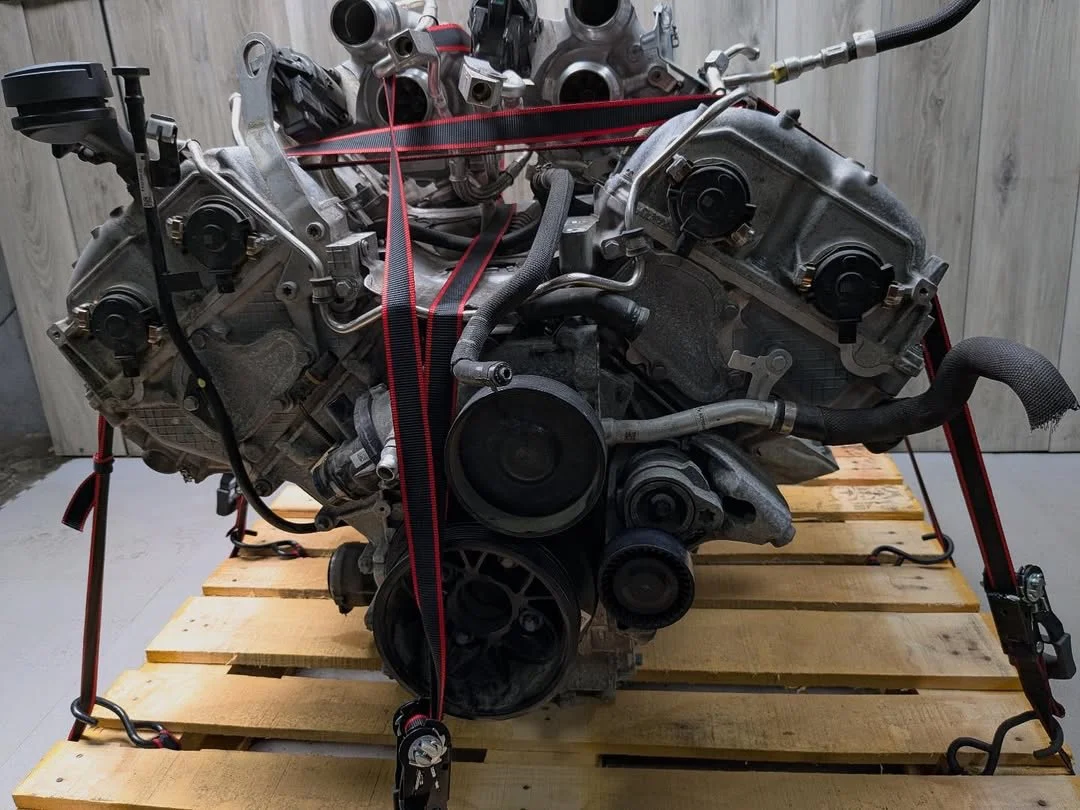
M50TUB25 in the 525i
The M50TUB25 was used in the E34 525i, built 1992–1995. It is a 2.5 L naturally aspirated petrol inline-6 with 192 hp and 245 Nm. Compared with the M20B25 (170 hp) and M50B25 (192 hp), it is in between.
525i engines by model year
| Model year | Engine |
|---|---|
| 1988 | M20B25 (170 hp) |
| 1989 | M20B25 (170 hp) |
| 1990 | M20B25 (170 hp), M50B25 (192 hp) |
| 1991 | M20B25 (170 hp), M50B25 (192 hp) |
| 1992 | M20B25 (170 hp), M50B25 (192 hp), M50TUB25 (192 hp) |
| 1993 | M20B25 (170 hp), M50B25 (192 hp), M50TUB25 (192 hp) |
| 1994 | M50B25 (192 hp), M50TUB25 (192 hp) |
| 1995 | M50B25 (192 hp), M50TUB25 (192 hp) |
| 1996 | M50B25 (192 hp) |
The engine changed 4 times during the E34 run, in 1990, 1992, 1994 and 1996. Changes usually come with BMW's mid-life update (LCI) or a new emissions standard, so a car registered early in a year can still have the older engine. The VIN settles it.
Other cars with the same engine as the 525i
A replacement engine does not have to come from another 525i. These models left the factory with the same engine code, so a unit from any of them is a candidate donor once the sump, mounts and ancillaries are matched to your car.
M20B25: BMW E30 325i, BMW Z1.
M50B25: BMW E36 325i.
M50TUB25: BMW E36 325i.
How to confirm your engine code
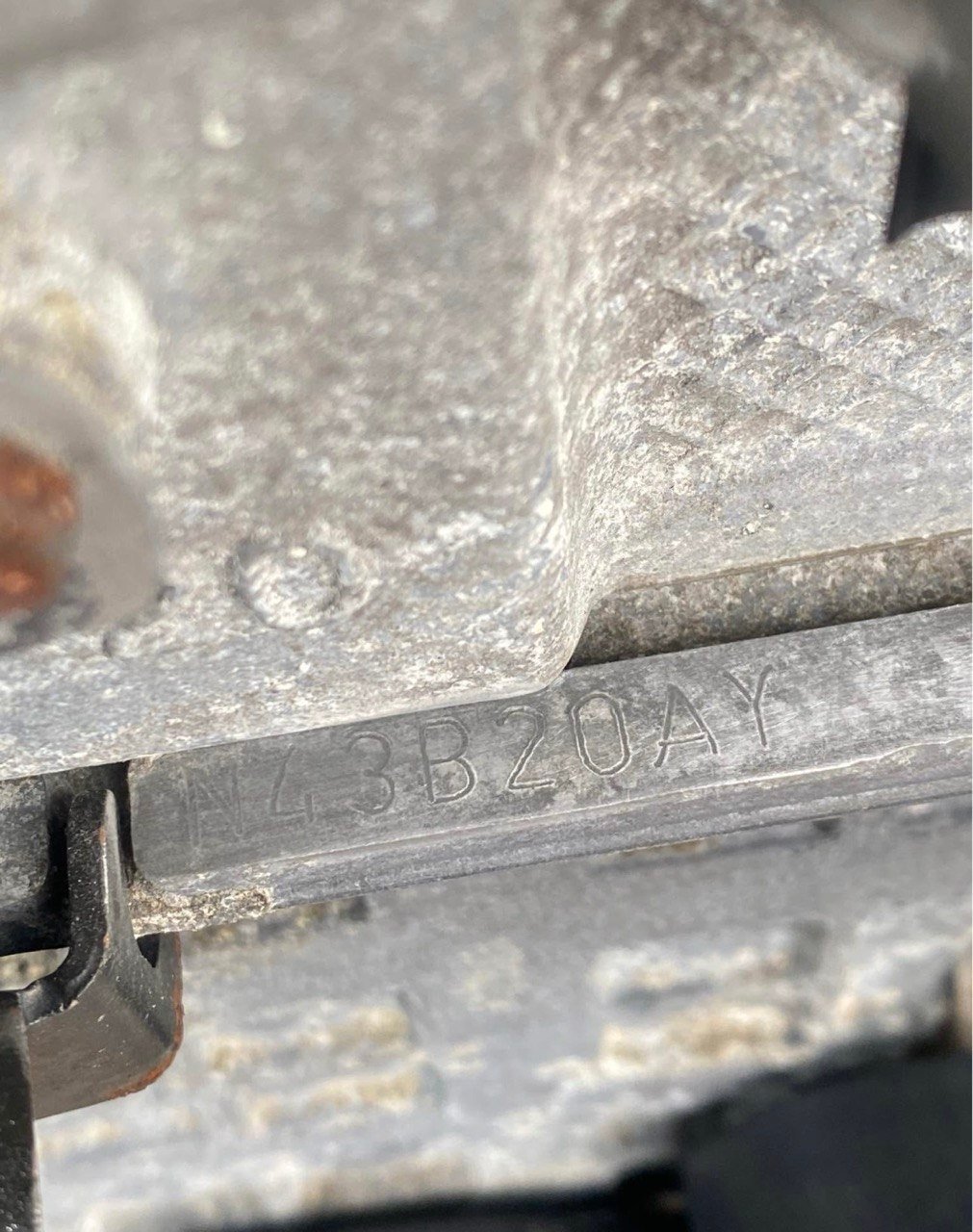
Because the 525i used more than one engine, the badge alone does not tell you which one your car has. The build date is the first clue; the VIN is the proof. Send us the last seven characters of the VIN and we read the engine code from BMW's records, or look for the code stamped on the block. How to find your BMW engine code.
Known 525i engine problems
M20B25 (M20 family)
The M20B25 in the 525i shares the known weak points of the M20 family. Full M20 guide.
| Known fault | What to check |
|---|---|
| Timing belt failure | Ask for the date of the last belt and tensioner change. If there is no record, treat it as due. |
| Cylinder head cracks | Pressure-test the cooling system and look for cracks when the cam cover is off. |
| Rocker arm and shaft wear | Inspect rockers and clips with the cam cover removed. |
| Oil spray bar and cam wear | Check the spray bar banjo bolts are tight and the holes clear. |
| Water pump and thermostat | Look for coolant trails below the pump and on the belt cover. |
Timing belt failure. The M20 is an interference engine. If the belt or tensioner fails, pistons hit valves and the head is scrap. Belts should be changed every 60,000 km or four years, whichever comes first.
Cylinder head cracks. Heads crack between the camshaft journals or between valve seats after overheating. Coolant loss and a sweet smell are the clues.
Rocker arm and shaft wear. Rocker arms can crack and the retaining clips can walk off the shaft. The 'rocker arm fix' with improved clips is a known upgrade.
Oil spray bar and cam wear. A loose or blocked spray bar starves the cam lobes. The result is a worn cam and noisy valve train.
Water pump and thermostat. The water pump is driven by the timing belt and is normally changed with it. A weeping pump can soak the new belt.
M50B25 and M50TUB25 (M50 family)
The M50B25 and M50TUB25 in the 525i share the known weak points of the M50 family. Full M50 guide.
| Known fault | What to check |
|---|---|
| Cooling system | Check for a metal impeller water pump and a recent expansion tank. |
| VANOS seals (M50TU) | Listen for a rattle at the front of the head at idle and check for a flat spot below 3,000 rpm. |
| Crankcase ventilation valve | Check for oil in the intake boot and around the dipstick tube. |
| Oil filter housing gasket | Look for oil on the alternator side of the engine. |
| Valve cover gasket | Remove a coil and inspect the well. |
Cooling system. Plastic water pump impellers, thermostat housings and expansion tanks crack, and overheating can warp the head.
VANOS seals (M50TU). The VANOS piston seals harden and the engine loses low-down torque and idles roughly.
Crankcase ventilation valve. The CCV valve can freeze or clog, pressurising the crankcase and pushing oil past seals.
Oil filter housing gasket. The gasket hardens and leaks oil down the side of the block.
Valve cover gasket. A common leak that also lets oil into the spark plug wells.
Symptoms to watch for on the 525i
Rattle for a few seconds after a cold start. The classic sign of a weak timing chain tensioner or stretched chain. It must be checked quickly: a chain that jumps a tooth can bend valves.
Poor low-down torque and uneven idle. VANOS seals or solenoids. The engine may run well at high revs but feel flat and lumpy at low speed.
Engine stops suddenly and will not restart. On belt-driven engines, a snapped timing belt. Do not keep cranking: on an interference engine the valves are probably already bent.
Looking after the 525i engine
M20 engines
- Oil: 10W-40 or 15W-40 semi-synthetic, about 4.25 litres with filter.
- Service interval: Oil every 7,500 km; valve clearances every 15,000 km; belt on time, not only on distance.
- Timing drive: Rubber timing belt with tensioner, changed with the water pump every 60,000 km or four years.
- Workshop notes: Valve clearance is set cold at about 0.25 mm with eccentric adjusters. Use a new head bolt set whenever the head comes off.
M50 engines
- Oil: 5W-40 or 10W-40 synthetic, about 6.5 litres with filter.
- Service interval: Oil every 10,000 to 15,000 km; cooling system as a set every 100,000 km.
- Timing drive: Duplex lower chain and single upper chain at the front with hydraulic tensioner.
- Workshop notes: Hydraulic lifters, no valve adjustment. Refresh VANOS seals when fitting a used M50TU.
Buying a used engine for the 525i: checklist
- Why your old engine failed. Before fitting a replacement, find out why the original failed. An overheating radiator, a blocked intercooler or a failed turbo can destroy a second engine if they are not fixed.
- Confirm the exact engine code. Read the code stamped on the block and compare it with the code for your car. Send us the last seven characters of the VIN and we confirm the match before anything is paid.
- List of what is fitted. Engines are sold with different ancillaries: some have the turbo, injectors, manifolds, alternator and starter, others are long blocks. Agree the list in writing so you know which parts must come from your old engine.
- Ask how the donor car was damaged. Most good used engines come from cars with body damage. A front-end impact can crack sensors, the timing cover or the sump; a rear or side impact usually leaves the engine untouched. The yard records the damage on each unit.
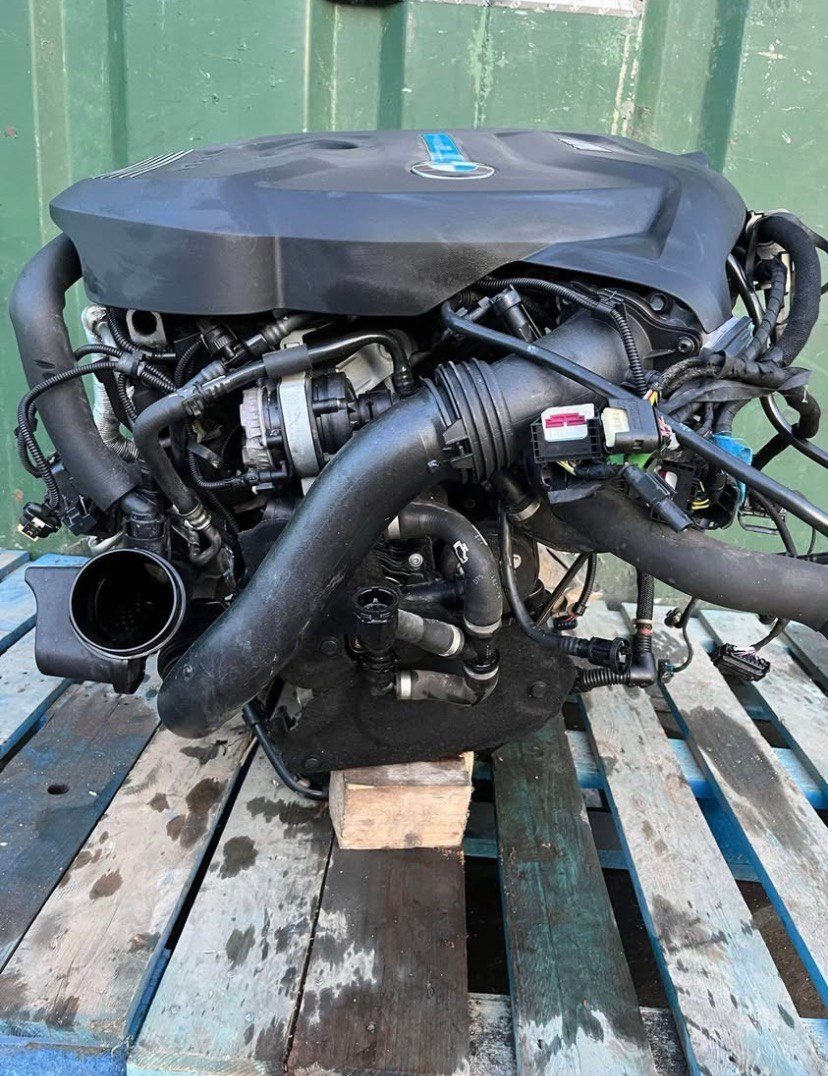
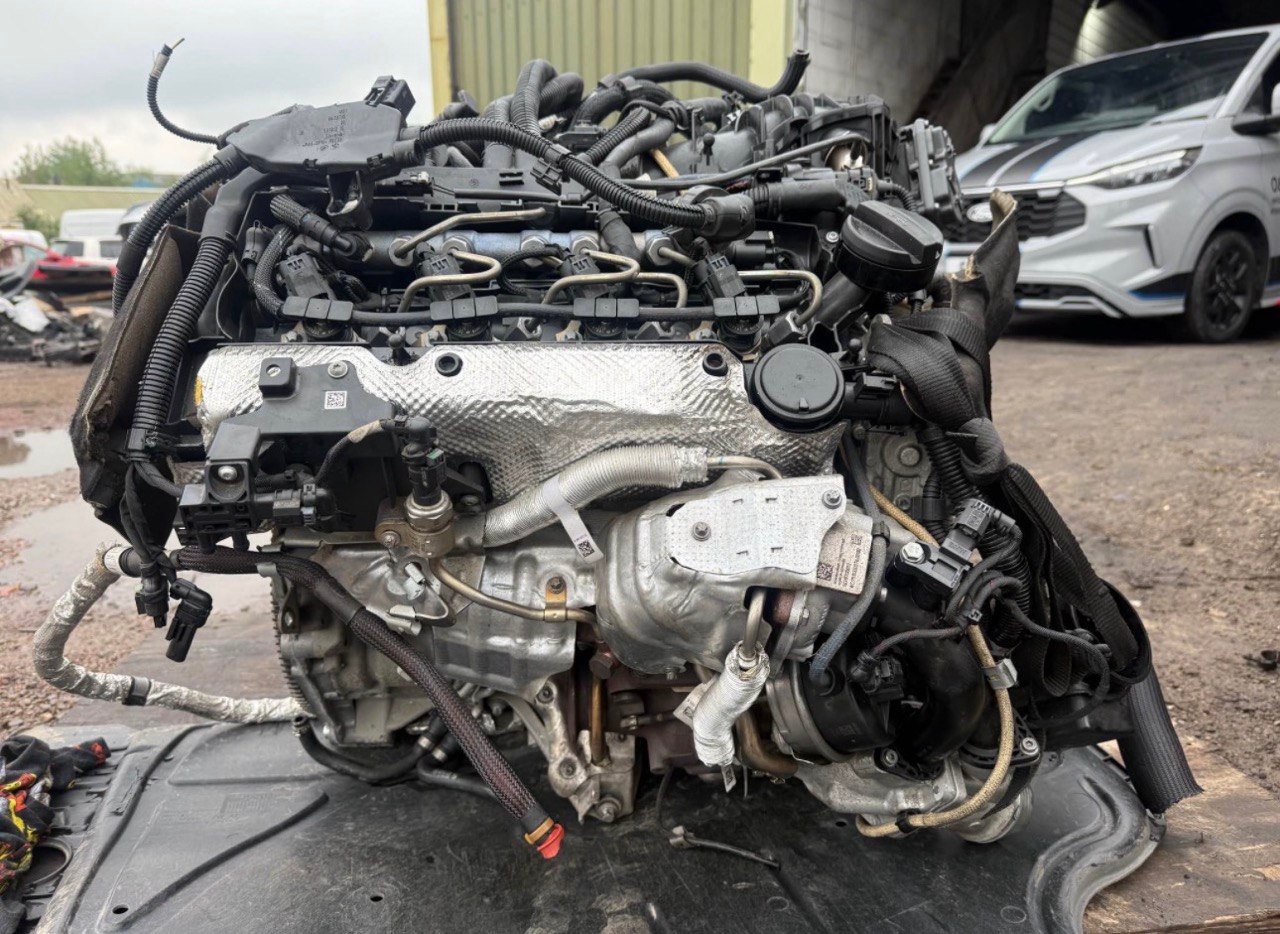
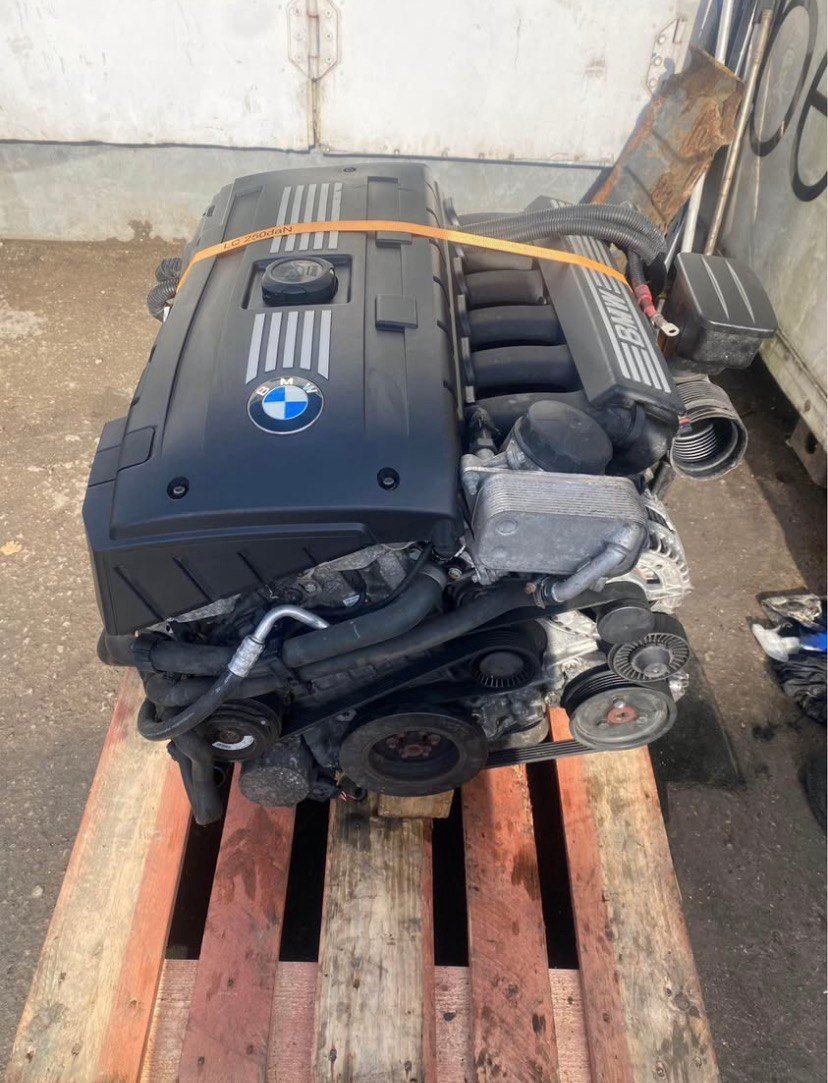
- Photographs from every side. Good suppliers photograph the actual engine you will receive. Look for the block stamp, the sump, the timing cover and any broken brackets or connectors in the pictures.
- Timing chain noise. Listen for a rattle at the front of the engine for the first seconds after a cold start. On an engine that cannot be run, look at the chain guides through the oil filler or with the valve cover off.
- Timing belt history. A timing belt must be changed on time and distance. With no dated record, treat the belt, tensioner and water pump as due and replace them before the first start.
- VANOS operation. Rough idle, a rattle from the front of the head and a loss of torque at low revs point to VANOS seals or solenoids. These are serviceable parts and are easier to renew with the engine out.
- Originality and numbers. For collectible cars, the engine number and correct ancillaries add value. Photograph the stamp and keep it with the car's documents.
- Plastic cooling parts. Expansion tanks, thermostat housings and water pump impellers made of plastic crack with age. Plan to replace them when the engine is fitted.
BMW 525i replacement engine cost
Our 525i engine stock runs to 7 units, priced from 1.210,00 € to 3.009,00 € with a median of 1.522,00 €.
Prices depend on the exact version, the donor's mileage, how complete the engine is and the demand for that code. Higher-output versions, low mileage and dressed engines with turbo, injectors and ancillaries cost more; long blocks and higher mileage cost less.
2 of these come from E34 donor cars, priced from 1.210,00 € to 1.729,00 €. An engine from the same body is the most direct swap because the sump, mounts and ancillaries already match.
On top of the engine, budget for the workshop's labour and the parts that are best replaced while the engine is out: engine mounts, the rear main seal, cooling parts, a clutch or converter seal, fluids and filters.
Replacement engines in stock for the 525i
These 525i units are in our Hamburg yard right now. Each listing shows real photographs of the engine you receive, its mileage and what is fitted.
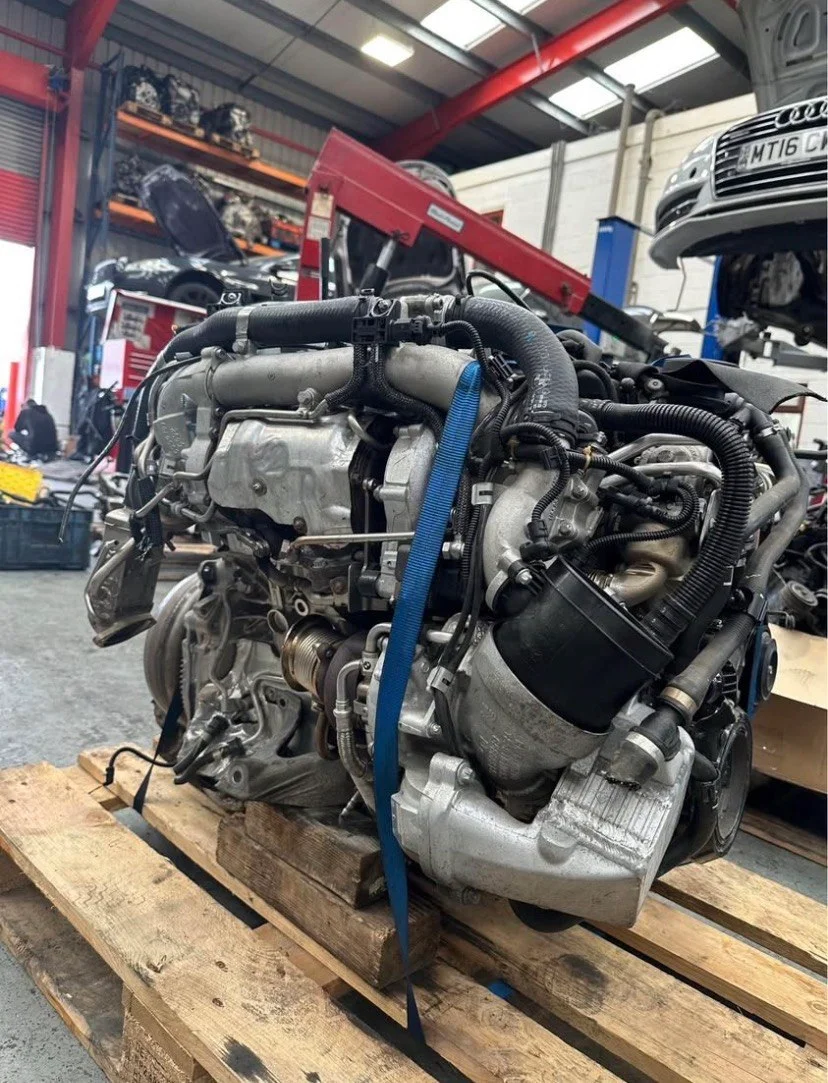 BMW M50B25 Engine1.522,00 €
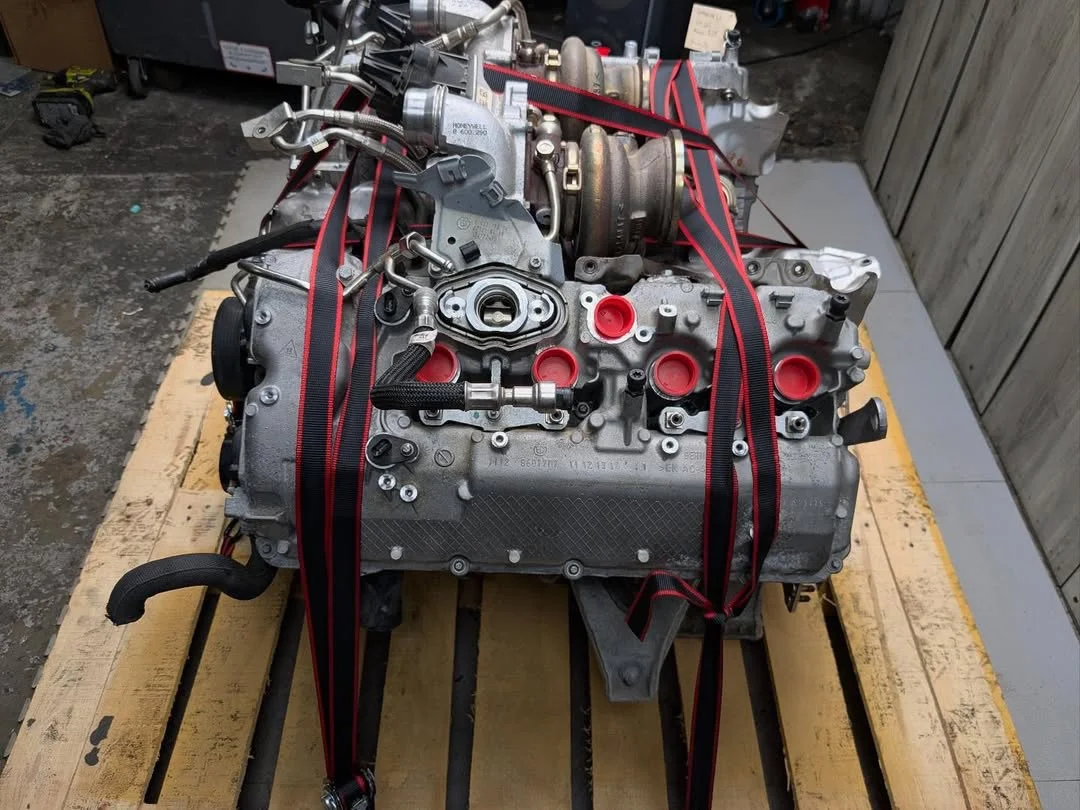 BMW E34 525i M50TUB25 Complete Engine1.210,00 €BMW M50B25 Engine1.805,00 €BMW M50TUB25 Engine1.216,00 €
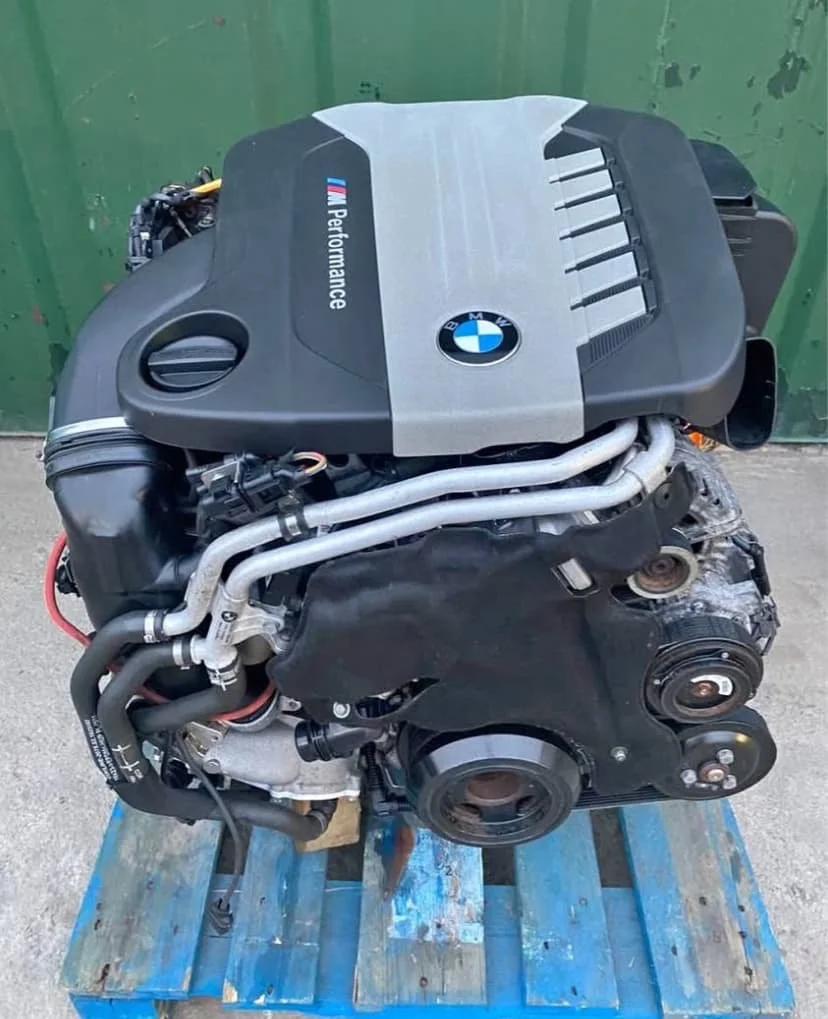 BMW E36 325i M50TUB25 Complete Engine1.219,00 €
BMW M50B25 Engine — 1.522,00 €, reduced from 1.900,00 €. It comes from a recorded donor car, and 10 units are available. We can confirm fitment against your VIN the same day.
BMW E34 525i M50TUB25 Complete Engine — 1.210,00 €, reduced from 1.800,00 €. It comes from a recorded donor car, and 19 units are available. The listing shows every side of the engine and the fitted parts.
BMW M50B25 Engine — 1.805,00 €, reduced from 2.300,00 €. It comes from a recorded donor car, and 12 units are available. Ask the desk for compression figures or extra photographs before you order.
BMW M50TUB25 Engine — 1.216,00 €, reduced from 1.800,00 €. It comes from a recorded donor car, and 8 units are available. Ask the desk for compression figures or extra photographs before you order.
BMW E36 325i M50TUB25 Complete Engine — 1.219,00 €, reduced from 1.800,00 €. It comes from a recorded donor car, and 15 units are available. We can confirm fitment against your VIN the same day.
Will it fit my 525i?
Will the M50TUB25 fit my BMW E34 525i?
For the BMW E34 525i, the M50TUB25 is the factory engine and the one to order. The third 5 Series was built 1988–1996, and the M50TUB25 was produced 1992–1995, so check that your car's build date falls inside that window. Confirm the drive type (rear-drive or xDrive), the gearbox (manual or automatic) and the emissions standard, because these can change the sump, the flywheel and the software. Send us the VIN and we check all of it for you.
How much is a replacement engine for a BMW E34 525i?
We have 1 M50TUB25 engine from E34 donor cars, priced from 1.210,00 €. Delivery to your door is included, and the engine carries a 12-month warranty when fitted by a qualified workshop. Add fitting labour and the parts you replace at the same time — seals, cooling parts and mounts — to estimate the total.
Engine swaps and upgrades for the 525i
These engines were fitted to other versions of the E34 at the factory, which makes them the most practical upgrades: the body was designed around them and many parts are shared.
| Engine | Factory model | Power | Gain |
|---|---|---|---|
| M30B35 | E34 535i | 211 hp | +19 hp |
| M60B30 | E34 530i V8 | 218 hp | +26 hp |
| S38B35 | E34 M5 3.5 | 260 hp | +68 hp |
| M60B40 | E34 540i | 286 hp | +94 hp |
| S38B36 | E34 M5 3.6 | 315 hp | +123 hp |
Can I fit the M30B35 in my 525i?
Yes, it is one of the more common upgrades. Both are petrol inline-6 engines, so the mounting points are similar, but the M30B35 needs its own wiring and engine control unit, the matching gearbox or clutch, and often a different sump, cooling and exhaust. The gain is 19 hp and 60 Nm. In Germany and most of Europe an engine swap must be inspected and registered.
Can I fit the M60B30 in my 525i?
It is a conversion rather than a replacement: the M60B30 is a V8 and your M50TUB25 an inline-6, so mounts, sump, cooling, exhaust, wiring and the engine control unit all change. The gain is 26 hp and 45 Nm. In Germany and most of Europe an engine swap must be inspected and registered.
Can I fit the S38B35 in my 525i?
Yes, it is one of the more common upgrades. Both are petrol inline-6 engines, so the mounting points are similar, but the S38B35 needs its own wiring and engine control unit, the matching gearbox or clutch, and often a different sump, cooling and exhaust. The gain is 68 hp and 85 Nm. In Germany and most of Europe an engine swap must be inspected and registered.
Fitting a replacement engine in the 525i
- Inspect or replace the timing chain parts. Look at the guides and tensioner. On high-mileage engines, replacing them now costs far less than doing it later.
- Fit a new timing belt kit. Fit a new belt, tensioner and water pump and set the timing with the correct tools before the first start.
- Reset VANOS adaptations. Clear the VANOS adaptations so the ECU learns the camshaft positions of the new engine.
- Fill with the right oil and prime it. Fill with new oil of the correct specification and a new filter. Crank with the fuel and ignition disabled until oil pressure builds.
- Coding and adaptations. On modern BMWs, the engine ECU must be matched to the car's immobiliser (CAS, FEM or BDC). Reset adaptations, register the battery and clear faults with diagnostic software.
- First start and leak check. Start the engine, let it idle and watch oil pressure, temperature and fault codes. Check for leaks and bleed the cooling system.
- First 1,000 km. Drive gently for the first few hundred kilometres, vary the engine speed and avoid full load. Change the oil and filter after about 1,000 km to remove any assembly debris.
The full fitting and first-start procedure.
Delivery, warranty and payment
Before a 525i engine leaves our Hamburg yard it is drained of oil and coolant, every opening is sealed, and it is strapped to a pallet and wrapped. We send photographs of the packed unit and the tracking details.
Delivery is door to door and included in the price. Most European addresses receive the engine within five to ten working days; Germany and its neighbours are usually faster.
A 12-month warranty covers eligible internal failure when the engine is fitted by a qualified workshop with new fluids and filters. You can pay by card, bank transfer or crypto and receive the invoice by email straight away.
All E34 engines · M20 engine guide · M50 engine guide · BMW 525i engines for sale · Send us your VIN